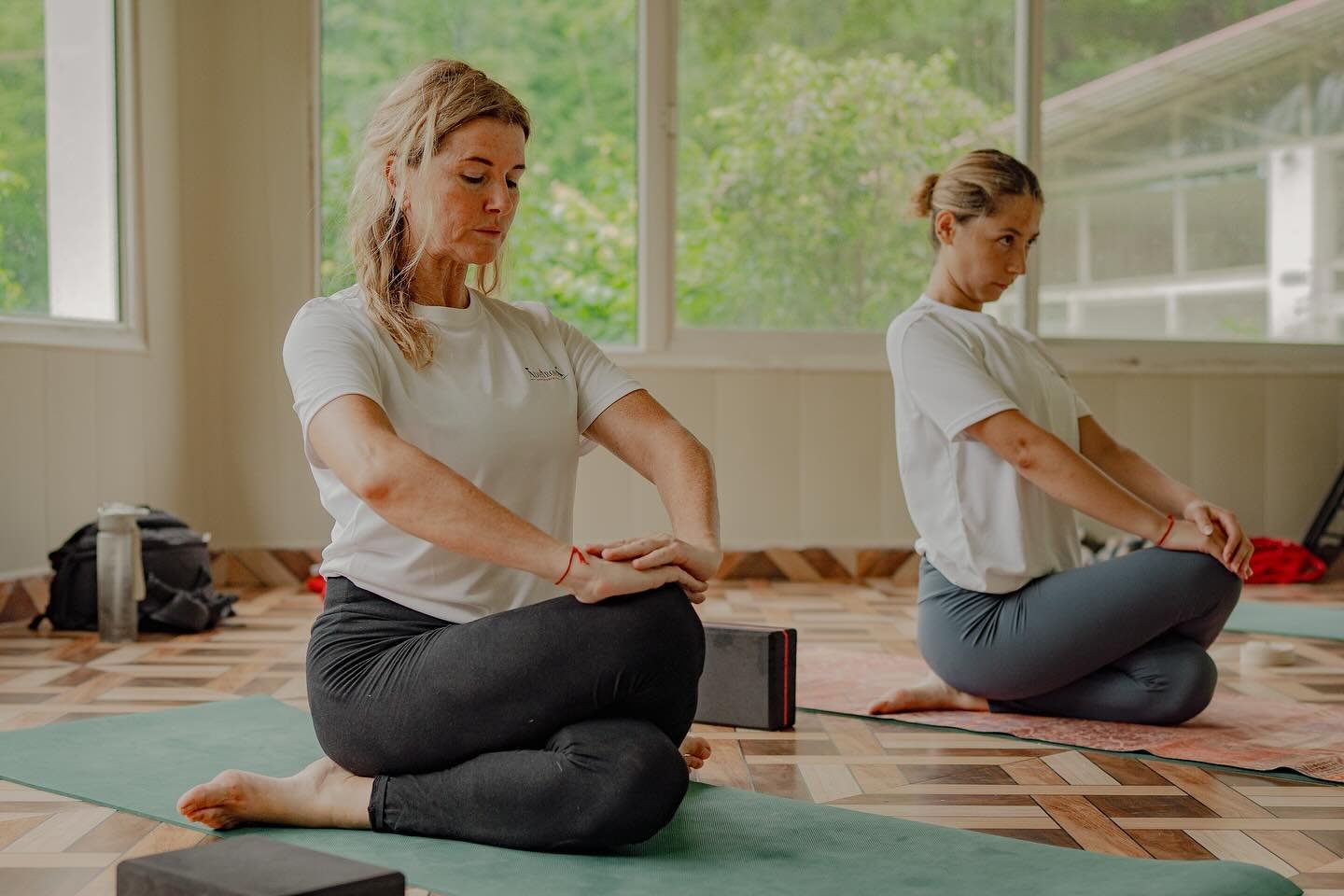

Ask a long-time yoga student what changed them most, and many will not mention a posture at all. They will mention how they started living — the food, the pace, the small daily choices. This is sattva: the quality of clarity and balance that yogic philosophy holds up as the foundation of a genuinely well-lived life.
01The Three Gunas: Sattva, Rajas and Tamas
Classical yogic philosophy describes all of existence, including our own minds, as woven from three qualities, or gunas. Tamas is heaviness, inertia and dullness. Rajas is restlessness, agitation and overstimulation. Sattva is clarity, balance and quiet lightness.
None of us live in only one state. We move between them daily — a sluggish, tamasic morning after too little sleep, a rajasic afternoon of scattered urgency, an occasional sattvic evening of real ease. The practice is not to eliminate the other two entirely, but to gradually tilt daily life toward sattva.
02What Sattvic Actually Means
It is a common mistake to think sattvic living begins and ends with diet. In truth, it describes an entire orientation — toward simplicity over excess, presence over distraction, and gentle discipline over either rigidity or indulgence.
A sattvic life is not an ascetic one. It is simply an uncluttered one — fewer unnecessary inputs, more attention paid to the ones that remain.
03Sattvic Food, Simply Explained
In the yogic framework, foods are loosely grouped by the quality they tend to encourage. Sattvic foods are fresh, whole and plant-based — seasonal fruit, vegetables, whole grains, legumes, nuts and dairy prepared simply. Rajasic foods are heavily spiced, fried or overly stimulating — excess caffeine, sharp chillies, heavy fried snacks. Tamasic foods are stale, overprocessed or reheated repeatedly, leaving the body sluggish rather than nourished.
You do not need to categorise every meal perfectly. Simply ask: was this cooked with care, recently, and eaten without rushing? That alone moves you toward sattva.
04A Sattvic Day, Hour by Hour
A sattvic rhythm usually begins before sunrise, with a quiet start rather than an immediate scroll through a screen. Meals are eaten at regular times, without distraction, and the heaviest meal is generally placed around midday, when digestion is naturally strongest.
Evenings wind down gradually — lighter food, dimmer light, less stimulation — rather than staying wired until the moment of sleep. None of this requires perfection; it simply asks for a little more structure than most modern days naturally have.
05The Environment You Keep
Sattva extends beyond the body into the spaces we inhabit. A decluttered room, natural light, clean linens, and a little quiet all support a settled mind far more than most people realise — the environment is, quite literally, part of the practice.
- Keep your immediate space simple and tidy, even if the rest of your life is busy
- Let in natural light where possible, and dim harsh artificial light in the evenings
- Introduce small, calming elements — a plant, a candle, a favourite quiet corner
06The Company and Media You Choose
Sattva is not only physical. What — and who — you regularly expose your mind to matters just as much as what you eat. Constant exposure to conflict, outrage or hurried conversation is its own form of rajasic or tamasic diet, quietly shaping your inner state.
This does not mean withdrawing from the world. It means choosing, where you reasonably can, conversations, content and company that leave you clearer rather than more agitated or more numb.
“What you feed your senses each day becomes, quite literally, what your mind is made of.”
07Bringing It Home After the Retreat Ends
The mistake many students make on returning home is trying to hold onto ashram life exactly as it was — and then feeling like a failure within a week. A gentler approach works better: choose two or three sattvic habits that mattered most to you, and protect just those, rather than attempting a total lifestyle overhaul overnight.
A quiet first hour of the morning, one home-cooked, unhurried meal a day, a little less screen before bed — small, sustainable anchors will carry the retreat home with you far better than an all-or-nothing resolution ever could.
The heart of it
- Sattva is the quality of clarity and balance yoga asks us to cultivate.
- It touches food, daily rhythm, environment and even the company you keep.
- Sattvic food means fresh, whole and simply prepared, not restrictive or joyless.
- Bring it home gradually — a few protected habits beat a total overhaul.
Experience sattvic living fully, in the place it was designed for. Join us for a retreat in Rishikesh.
Reserve Your Seat