

Introduction

PCOS weight gain isn't your fault. Up to 80% of women with PCOS struggle with weight — especially around the abdomen — due to insulin resistance, elevated androgens, and cortisol dysregulation. Traditional "eat less, move more" advice often fails because PCOS changes how your body processes energy.
This guide explains the real drivers of PCOS weight gain and shows how yoga supports sustainable weight management without worsening hormonal imbalance.
Hormonal vs Lifestyle Weight Gain — Understanding the Difference
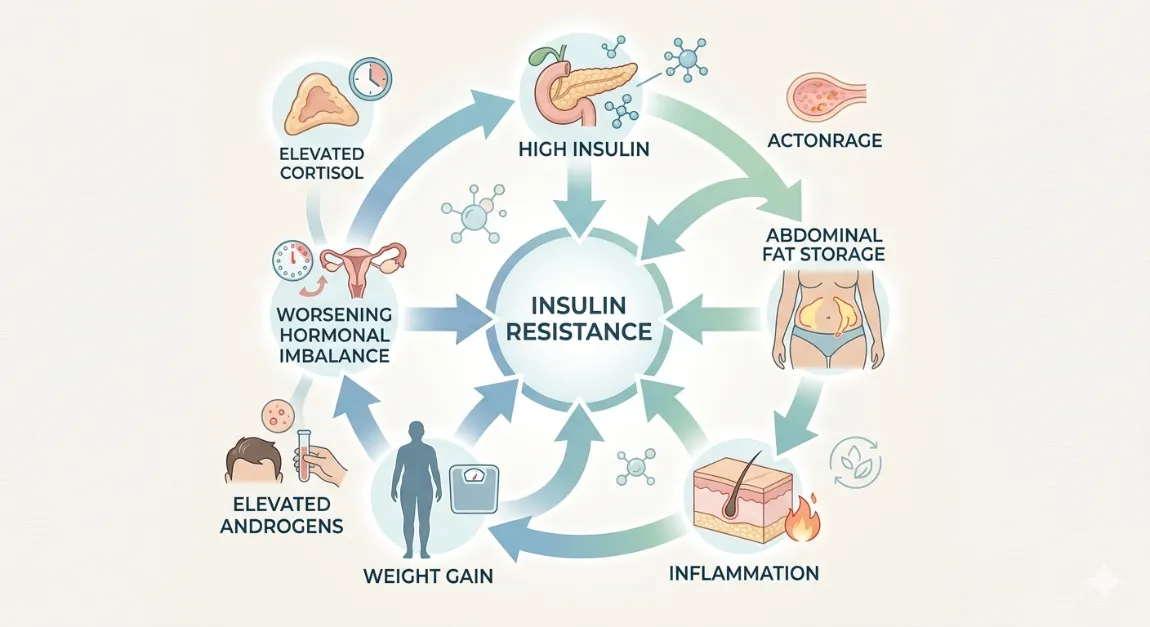
PCOS weight gain is driven by insulin resistance, elevated androgens (causing abdominal fat storage), chronic inflammation, and cortisol dysregulation — not simply calories. High insulin promotes fat storage and prevents fat burning, creating a vicious cycle that makes weight loss much harder than in women without PCOS.
Insulin Resistance and PCOS Metabolism
Insulin resistance affects up to 70% of women with PCOS. Cells stop responding properly to insulin, leading the pancreas to produce more. This signals the body to store fat — particularly visceral belly fat — and makes weight loss difficult even with calorie restriction.
Yoga improves insulin sensitivity through muscle engagement, stress reduction, better sleep, and reduced inflammation.
The Sustainable Movement Approach for PCOS

The best approach combines moderate yoga, walking, and strength training while avoiding overtraining. Recommended styles:
- Gentle to moderate Hatha and Vinyasa (3–4 times weekly)
- Power yoga (1–2 times weekly)
- Restorative and Yin Yoga for recovery
- Daily walking (30–45 minutes)
Pranayama and meditation further support metabolic health by lowering cortisol.
Avoiding Overtraining Mistakes That Worsen Weight Gain

Excessive cardio, daily hot yoga, and chronic high-intensity training elevate cortisol, worsen insulin resistance, and promote belly fat. Signs of overtraining include plateaus, fatigue, mood changes, sleep disruption, and irregular cycles. Prioritise rest days, recovery, and 7–9 hours of quality sleep.
Long-Term Body Regulation Through Yoga

Sustainable progress takes time. Expect energy and mood improvements in 4–6 weeks, noticeable metabolic shifts around 8–12 weeks, and meaningful weight changes over 16–24 weeks. Focus on non-scale victories: better energy, regular cycles, reduced cravings, and improved strength.
Frequently Asked Questions
Q: Why is PCOS weight loss so difficult?
Insulin resistance, elevated androgens, inflammation, and cortisol dysregulation make fat storage easier and fat burning harder. Addressing these root causes is essential.
Q: What is the best yoga for PCOS weight loss?
Moderate Hatha, Vinyasa, and strength-focused flows combined with Restorative/Yin Yoga for recovery. Walking and light strength training complement yoga well.
Q: How long does it take to see results with PCOS?
Energy and mood improve in 4–6 weeks. Sustainable weight loss and metabolic improvements typically appear in 12–24 weeks with consistent practice and nutrition.
Q: Can over-exercising worsen PCOS weight gain?
Yes. Excessive exercise raises cortisol, worsens insulin resistance, and can lead to plateaus or more abdominal fat storage.
Conclusion
PCOS weight gain is not a willpower issue — it's a metabolic one. Yoga offers a sustainable, nervous-system-friendly path to better insulin sensitivity, reduced stress, and long-term body regulation. Focus on consistency, recovery, and self-compassion. Combine gentle movement with proper nutrition and medical support for the best results.