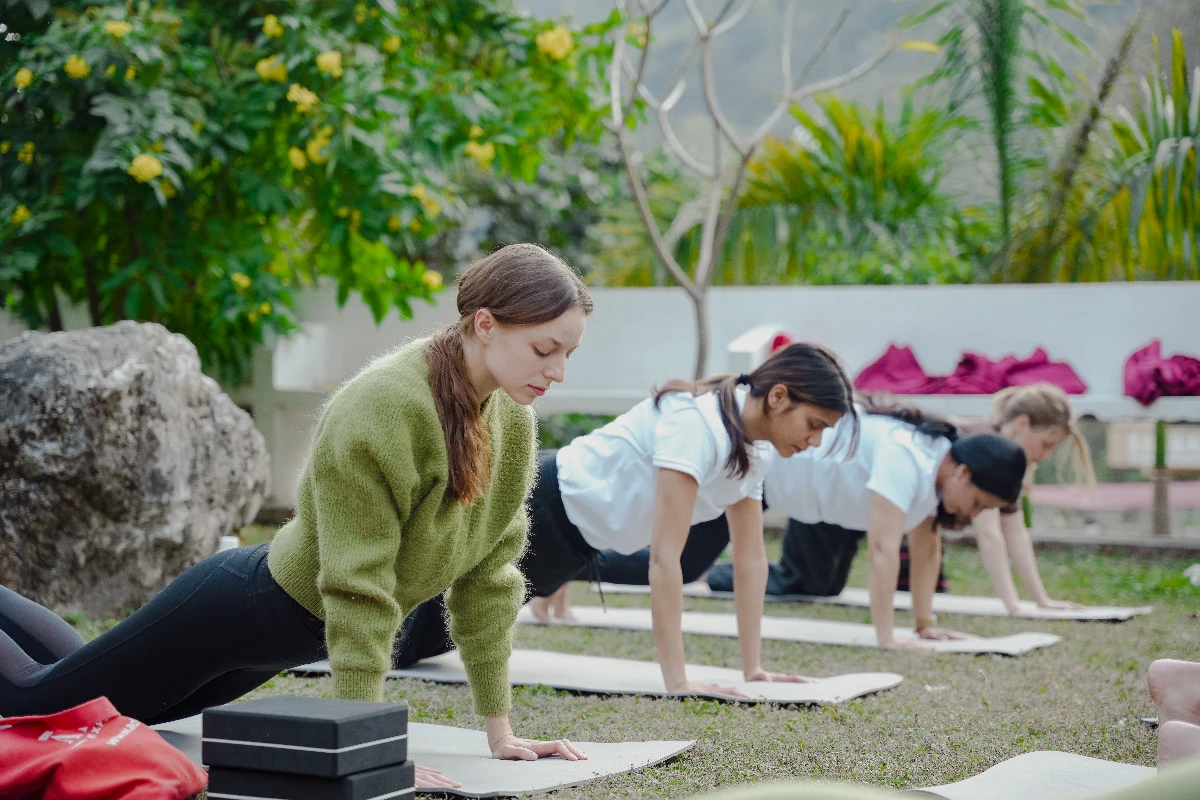

The clock reads 10:30pm. Exhausted, somehow not sleepy at all. The body feels restless, and the mind keeps running through tomorrow’s list uninvited. Most sleep advice only tells you what not to do before bed — no screen, no caffeine, no vigorous exercise — but almost nothing tells you what to actively do instead. That is exactly where evening yoga earns its place: research suggests people who practise gentle evening yoga fall asleep roughly twelve minutes faster on average and report twenty-seven percent better sleep quality. This is not about becoming a yogi or mastering a complicated pose. It is about giving the body the exact release, relaxation and signal it needs to shift naturally into sleep mode — which poses calm the nervous system, how long to actually hold each one, and how to sequence a practice for the fullest benefit.
01What This Practice Actually Does
None of this requires talent or flexibility. What it requires is roughly the same ten to twenty minutes most people already spend scrolling before turning the light off, redirected instead toward a handful of poses that speak directly to the nervous system. The chapters that follow cover exactly which poses to choose, which to avoid, how long to actually hold each one, and how to build a habit around all of it that survives the first difficult week.
02Why It Works
Evening yoga is not simply stretching before bed — it is a deliberate nervous-system intervention aimed at exactly what is keeping a person awake in the first place. Through an ordinary day, the sympathetic nervous system, the fight-or-flight branch, stays quietly activated by work stress, deadline and constant mental stimulation, and by evening the body is often still stuck in that same gear.
Sleep requires the opposite: parasympathetic activation, the rest-and-digest mode. Evening yoga flips that switch through several pathways at once — slow, controlled movement signals safety directly to the nervous system, deep breathing with an extended exhale activates the vagus nerve, and a gentle pose releases whatever physical tension has accumulated through the day. None of this happens instantly, though; the nervous system genuinely needs time to transition, which is why starting the practice one to two hours before the target bedtime, rather than five minutes before, gives the body adequate room to actually shift from active to rest.
Sleep onset also requires a drop in core body temperature, and a gentle movement followed by real stillness facilitates exactly that cooling — a forward fold and a restorative pose both lower metabolic rate directly. Often the harder part of falling asleep is not physical tiredness at all but mental activation, and evening yoga redirects that mental energy toward physical sensation and breath, breaking the rumination loop rather than fighting it head-on. Over time the sequence itself becomes a ritual boundary between day and night — the brain learns that this particular sequence means “the working day is done, sleep preparation has begun,” and that association strengthens noticeably within two to three weeks of consistent repetition.
03Gentle Poses Versus Stimulating Ones
Not all yoga is equal when sleep is the goal. Some poses calm the system; others energise it, and practising the wrong ones at night quietly sabotages the very thing being worked toward.
Poses that calm. A forward fold is the clearest ally in the evening — Child’s pose, seated forward bend and standing forward fold all trigger parasympathetic activation directly, the heart sitting higher than the head, blood pressure easing, the nervous system reading the whole shape as safe to rest in. A gentle twist releases tension without stimulating anything — a supine spinal twist or a seated variation massages the spine and the organs beneath it while the body stays genuinely calm throughout. A hip opener — reclining pigeon, butterfly, happy baby — releases both emotional and physical holding stored in the pelvis, one of the densest reservoirs of tension in the entire body. What makes all of these work specifically is that they are passive: gravity and time create the release rather than any effort or pushing on the practitioner’s part.
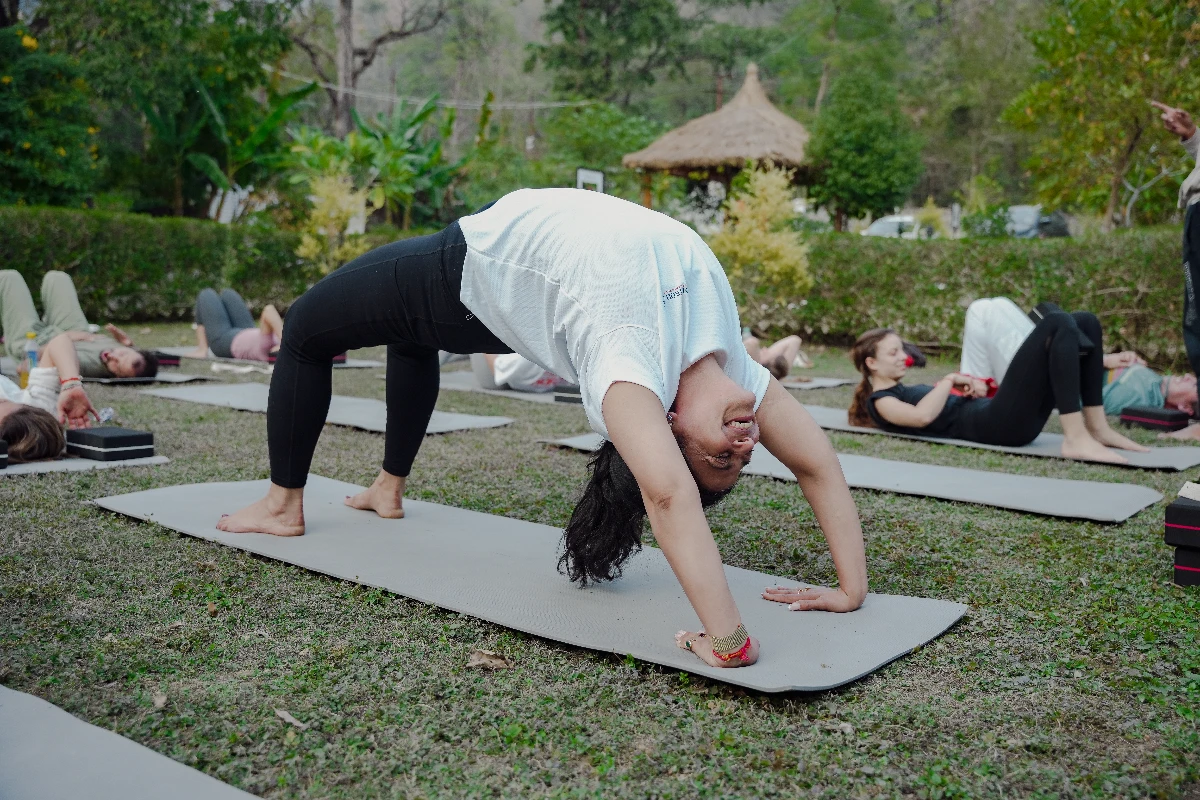
Poses to avoid after roughly six in the evening. A backbend is stimulating by its very nature — Cobra, Upward Dog, Camel and Wheel all open the chest, raise heart rate, and activate the nervous system, which is exactly the wrong direction at night; save these for the morning instead. An inversion like Headstand or Shoulder Stand stimulates many people directly, though gentle Legs-Up-the-Wall remains fine even late; save the fuller inversions for earlier in the day. Strong core work raises cortisol and creates activation rather than release — Boat Pose, plank and any intense abdominal sequence belong in a morning routine, not an evening one. A vigorous flow or power class generates real heat and raises heart rate, and even when the body feels physically tired afterward, the mind is often still mentally activated underneath that tiredness.
A simple temperature test settles most of the ambiguity: if a pose produces sweat or heavy breathing, it is too stimulating for the evening, full stop. Heart rate should gradually decrease across the practice, never spike partway through. A dedicated yin yoga class in the evening is, in fact, perfectly designed for exactly this purpose — long-held, entirely passive poses that activate the parasympathetic response as deeply as anything on this list.
04Easing Physical Restlessness
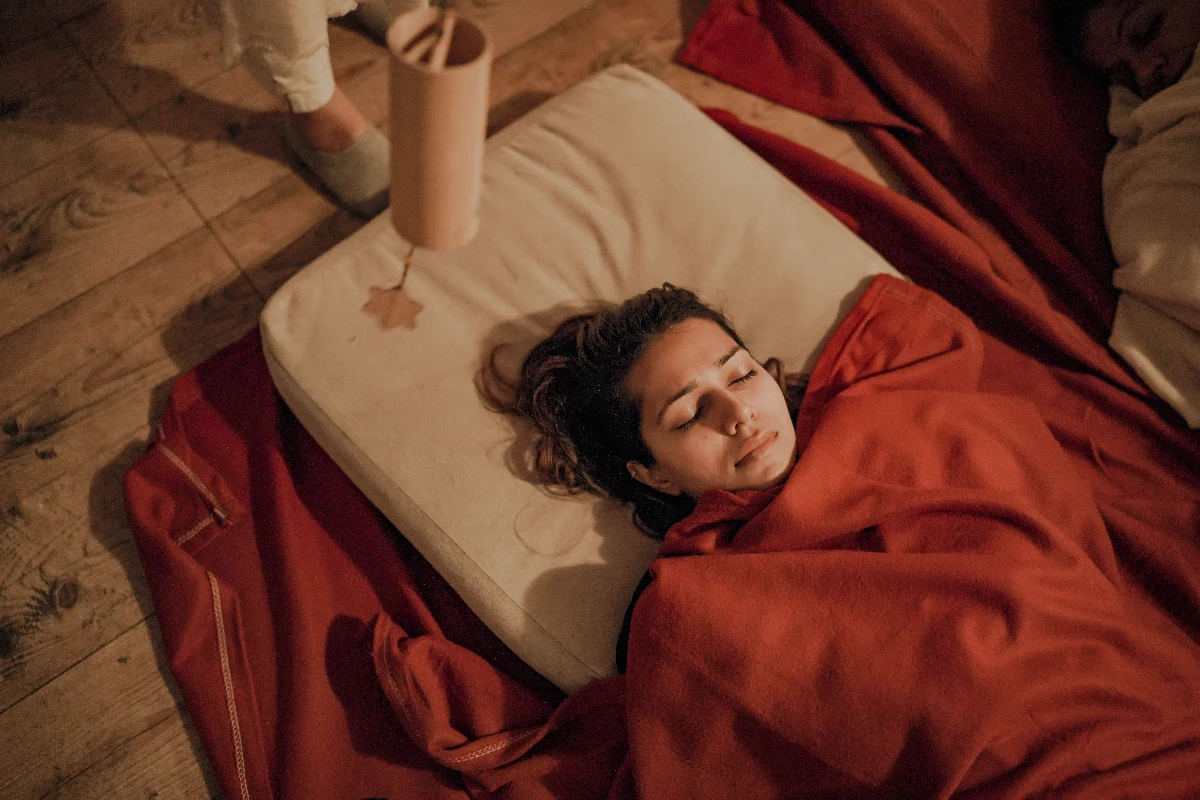
The restless feeling — the inability to get comfortable, the constant urge to shift position — blocks sleep onset more effectively than almost anything else on this list, and it is rarely purely mental; it is accumulated tension, an incomplete stress cycle, energy that has simply never been properly discharged through the day.
The hips hold emotional tension and the compression of daily sitting in equal measure — reclining pigeon, butterfly and happy baby address hip tightness specifically, and holding each for three to five minutes allows a genuinely deep release rather than a superficial one. The shoulders and neck carry the stress of screen and desk work; a gentle shoulder roll, neck stretch, or threading-the-needle pose releases upper-body tension when moved through slowly, breathing directly into whatever feels tight. The jaw and face hold a tremendous amount of tension most people never consciously register at all — during evening practice, deliberately soften the jaw, release the tongue from the roof of the mouth, and let the face muscles go slack on purpose.
A gentle rocking motion soothes the nervous system in a way that goes back to infancy — rocking side to side in Child’s Pose, or forward and back through Cat-Cow, both mimic a soothing motion the body has responded to since before it could walk. A shaking movement helps discharge energy that has become genuinely stuck — a gentle leg shake, an arm shake, or full-body trembling while lying on the back all release built-up neurological activation directly. Most people notice a meaningful reduction in restlessness within ten to fifteen minutes of this kind of practice.
If restlessness fails to improve despite two to three consistent weeks of evening practice, it is worth considering an underlying issue rather than pushing the practice harder — restless leg syndrome, for instance, genuinely warrants medical evaluation rather than more yoga. Diet plays its own quiet role here too: insufficient protein through the day leads to blood-sugar instability, which shows up at night as restlessness and waking, so adequate protein earlier in the day is worth checking before assuming the issue is purely energetic.
05Duration and Sequencing That Actually Works
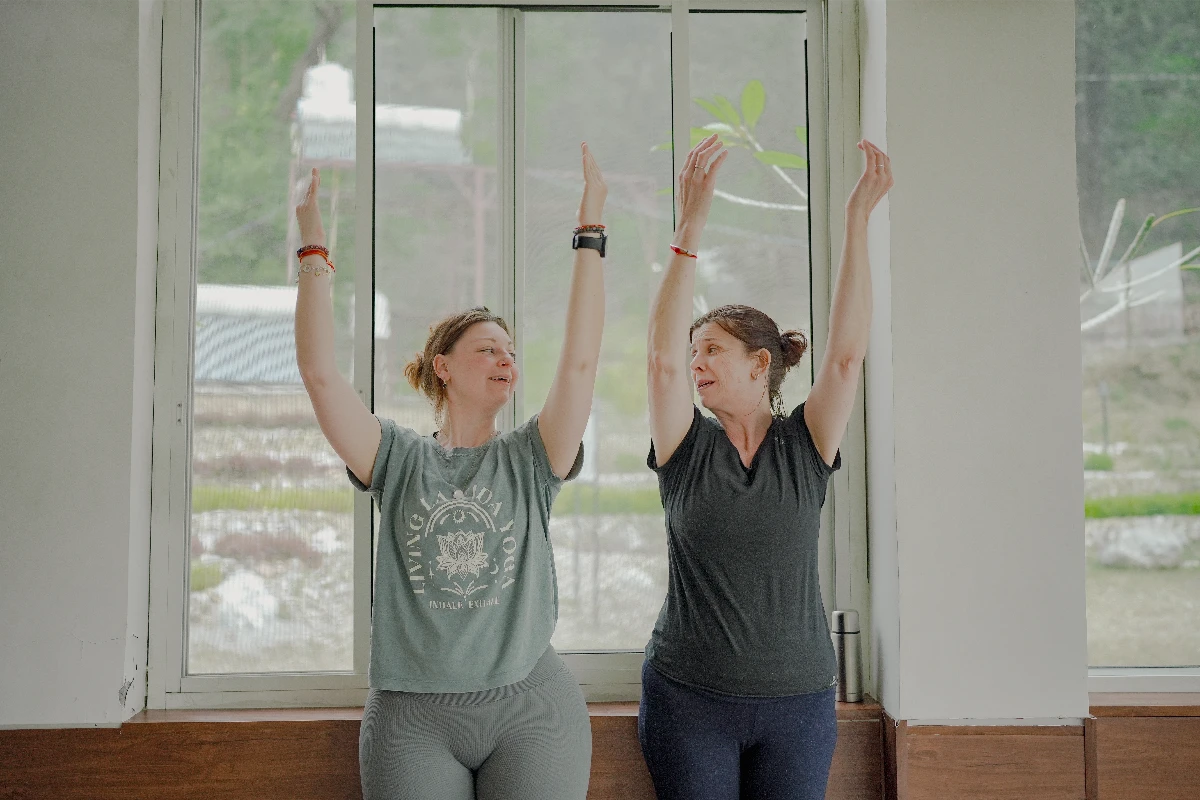
How long a pose is held, and the order poses are practised in, matters more than most people expect for sleep specifically — random stretching simply does not produce the same nervous-system response as a properly sequenced practice does.
A quick stretch activates the muscle without shifting the nervous system at all; deep parasympathetic activation genuinely requires time, typically two to five minutes per pose rather than thirty seconds. On first entering a pose the muscle resists; after thirty to sixty seconds the initial tension starts releasing; somewhere between ninety seconds and three minutes the deeper fascia lets go and the nervous-system shift actually occurs. None of this can be forced by trying harder — it is created by staying present, breathing steadily, and simply allowing the time to do the work it needs to do.
Begin standing or seated upright and move progressively toward lying down, mirroring the body’s own natural progression toward sleep. Start with a slightly larger movement and gradually slow and soften it, moving from active toward fully passive — the earliest poses can involve mild effort, while the later ones should be completely supported by prop or floor.
A sample sequence: standing forward fold for two minutes, letting gravity create the stretch with soft knees; seated forward fold for three minutes, propping the knees if the hamstrings are tight and lengthening every exhale; a supine twist on each side for three minutes, both shoulders staying grounded, breathing into the belly; reclining butterfly for four minutes, knees supported with a pillow if needed, one hand on the heart and one on the belly; Legs-Up-the-Wall for five minutes, scooted close to the wall with the arms resting by the sides; and a final relaxation of ten minutes minimum, covered with a blanket, allowing complete stillness. This roughly twenty-seven-minute sequence produces a genuinely profound nervous-system shift by the end of it.
Without thirty minutes to spare, five minutes in Child’s Pose with focused breathing produces more benefit than rushing through ten poses badly. The minimum effective version: one forward fold for two to three minutes, one hip opener for two to three minutes, and a final relaxation of five minutes — ten to twelve minutes total, and still genuinely worth doing.
06Making the Habit Stick
Knowing what to do rarely helps if it never actually gets done. Building a practice that survives past the first enthusiastic week requires strategy, not simply motivation.
Start ridiculously small. Five minutes, not fifteen, not thirty. This feels almost too easy, which is exactly the point — the habit being built is the habit of practising at all, not the habit of a long practice. Once five minutes becomes automatic, usually within two to three weeks, extend to ten. Choose one pose that is genuinely enjoyed — Child’s Pose, perhaps, or Legs-Up-the-Wall — and repeat exactly that pose for five minutes every night rather than varying the routine constantly.
Link it to an existing habit. Attach the new practice to something already done reliably every night — unroll the mat right after brushing teeth, or do one pose immediately after putting on pyjamas. Motivation is unreliable by nature; a physical link to an existing routine is not. The bathroom, in effect, becomes the cue to practise.
Set the environment up in advance. A mat left visible in the bedroom is a constant, quiet invitation, while friction of any kind — furniture to move, props to dig out — reliably kills the habit before it forms. Gentle sounds to heal playing during the practice can become its own powerful sleep signal too, the consistent audio doing part of the conditioning work on its own over time.
Handle a missed night gracefully. Missing a night simply means practising again the next one — no punishment set, no making up for lost time. Guilt over a missed practice creates a genuinely negative association with the whole routine, while compassionate consistency reliably beats an attempt at perfection.
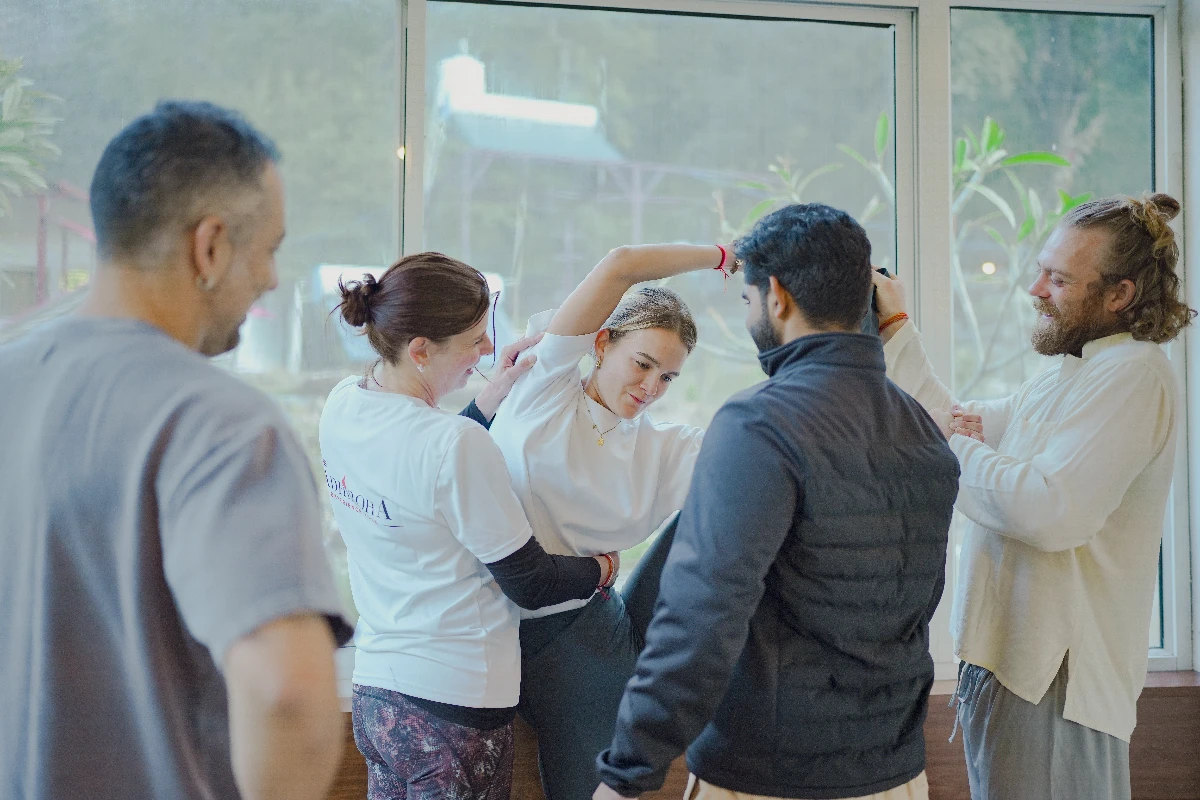
After three to four weeks of a consistent five-minute practice, a longer session tends to feel wanted rather than forced — add one pose, or two extra minutes, and let it grow from there. Some people settle happily at ten minutes indefinitely; others grow toward thirty. Both count as success, provided sleep genuinely improves and the practice itself sustains. Students in a 300-hour yoga teacher training learn this same principle early: the best practice is the one that actually gets done, and sustainable beats optimal every single time.
Start tonight with just five minutes in Child’s Pose — tomorrow’s sleep will very likely thank you for it.
“The practice becomes a ritual boundary between day and night. The brain learns: work is done, sleep preparation begins.”
The heart of it
- Evening yoga works by activating the parasympathetic nervous system, not by producing physical exhaustion.
- A forward fold, twist and hip opener calm; a backbend, inversion and core sequence stimulate — keep the two apart after roughly six in the evening.
- Two to five minutes per pose is what actually produces a nervous-system shift; a quick stretch does not.
- Five minutes done nightly beats thirty minutes done occasionally, especially in the first month of building the habit.
Ready for deeper transformation? Explore Adhiroha’s full range of yoga courses.
Reserve Your Seat