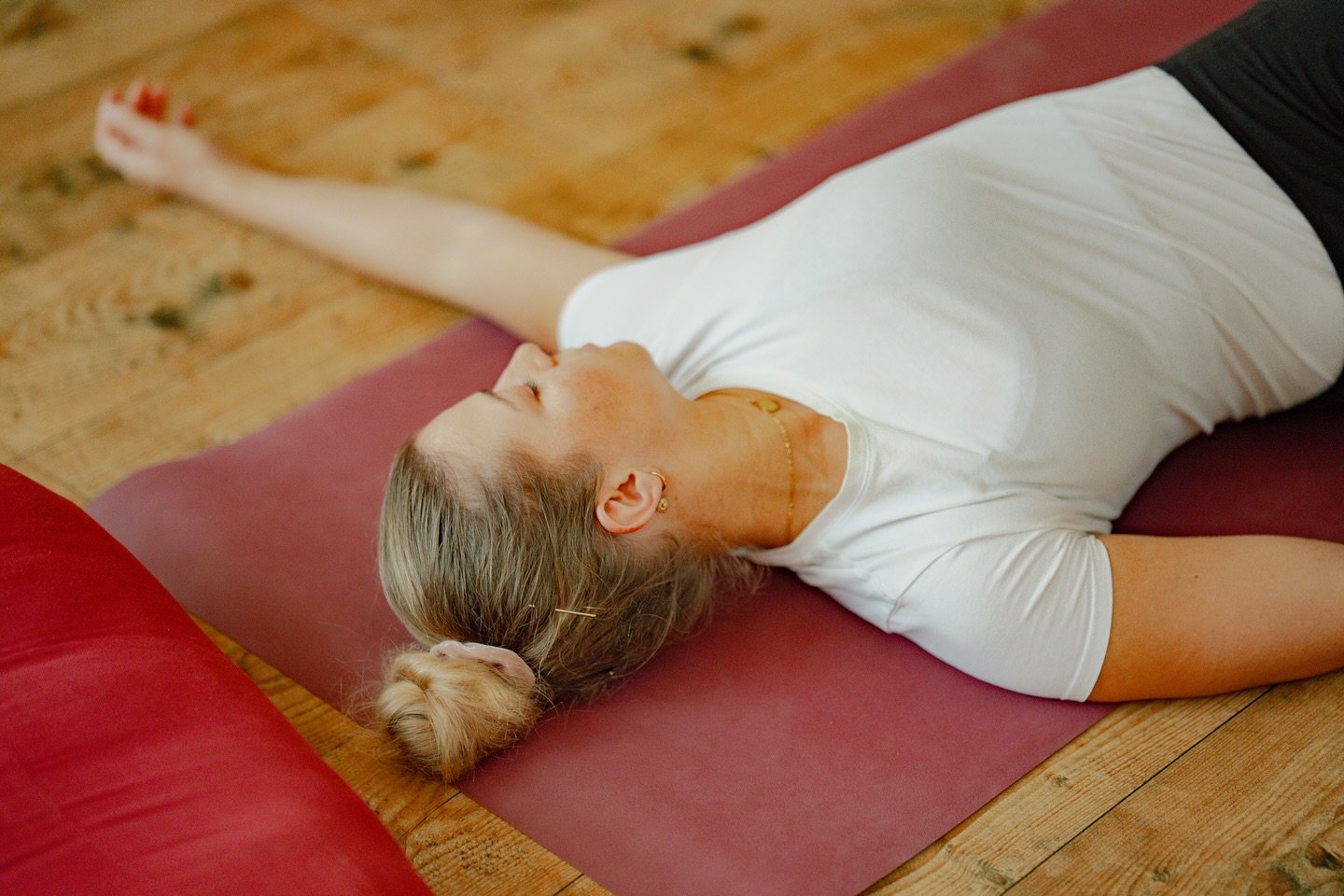

Wake up with neck stiffness again? That constant ache between your shoulder blades? Lower back screaming by afternoon? You are not alone — over eighty percent of adults battle chronic neck and back pain. The real culprit is modern life itself, systematically working against your spine: hours hunched over screens, poor posture at desks, stress locked into the shoulders, and a sedentary lifestyle weakening the very muscles meant to support it all. This complete guide offers sixteen proven yoga poses, expert technique, daily routines that actually work, and the lifestyle strategies that amplify every result.
01Understanding Your Neck and Spine Pain
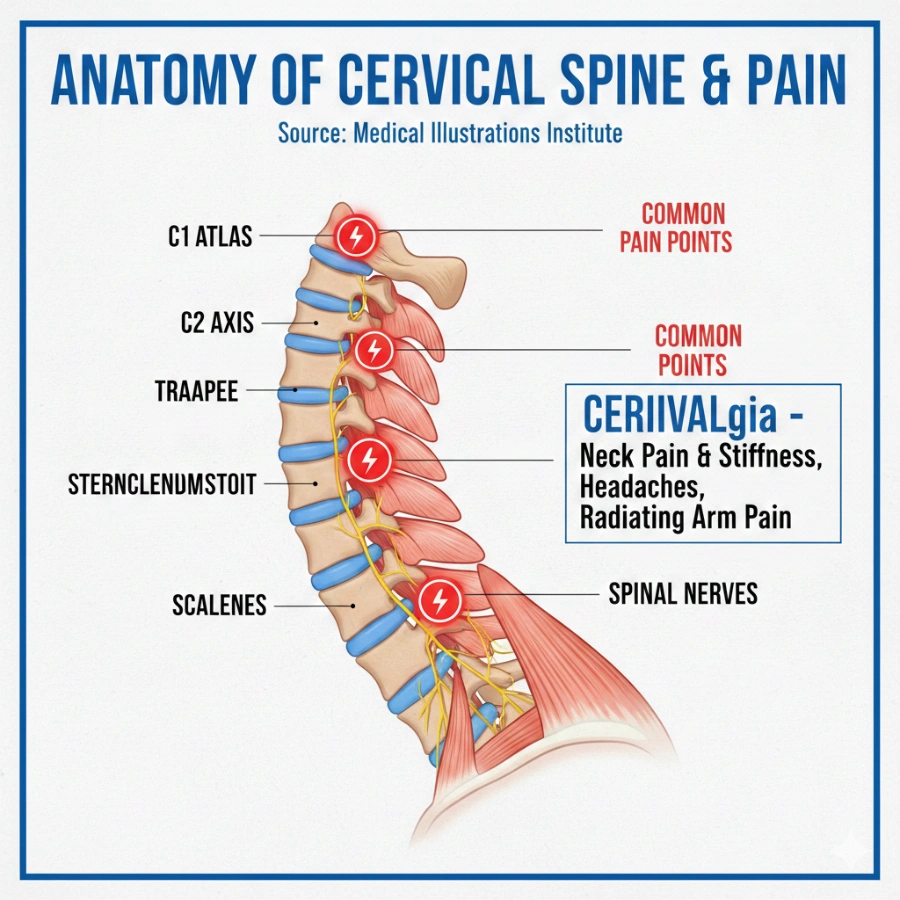
Your head weighs ten to twelve pounds normally. Tilt it forward to check your phone, and that weight becomes sixty pounds of pressure on the cervical spine — like carrying a child on your shoulders, all day, every day.
Common causes of neck pain include text-neck syndrome from constant device use, forward head posture from desk work, muscle tension from stress and anxiety, sleeping with unsupportive pillows, repetitive strain, and simply poor posture carried through daily activity. Spine pain, meanwhile, often traces back to herniated discs pressing on nerves, muscle strain from poor lifting technique, degenerative changes with age, weak core muscles failing to support the spine, and prolonged sitting compressing the lower back.
Women tend to report more back pain; men more often report neck issues — but everyone loses when the spine isn’t properly cared for. The connection few people talk about is that neck and spine work as one integrated system: neck pain often causes spine compensation, and spine issues create neck tension in turn. Treating them separately tends to fail, which is exactly why this guide addresses both together.
02Why Yoga Works When Everything Else Fails
You have likely tried heat packs, massage guns, pain pills and physical therapy. They help temporarily, then the pain returns with a vengeance. Yoga works differently because it addresses root causes rather than symptoms alone — strengthening support muscles, increasing joint lubrication, improving body awareness, releasing trapped nerves, balancing muscle tension, activating the body’s own healing response, bringing nutrient-rich blood to the area, and correcting the postural compensations that built the problem in the first place.
“You’re as young as your spine is flexible.” Ancient yogis knew this long before modern science confirmed it.
03Safety Guidelines: Read Before You Practise
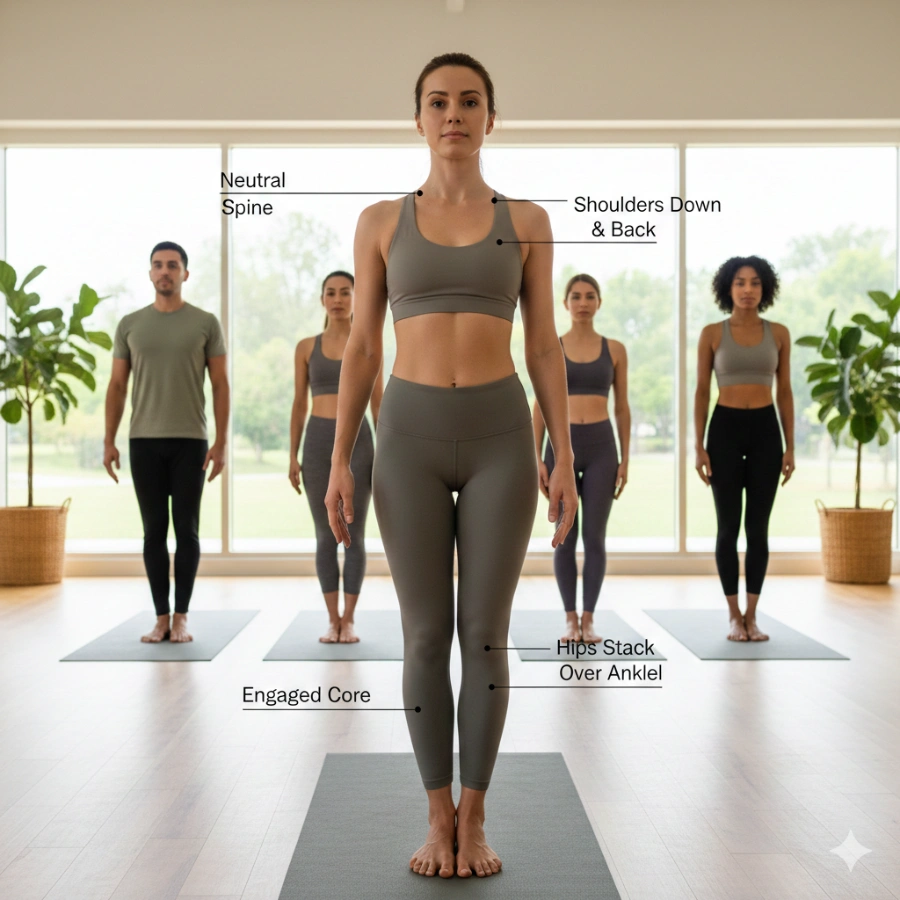
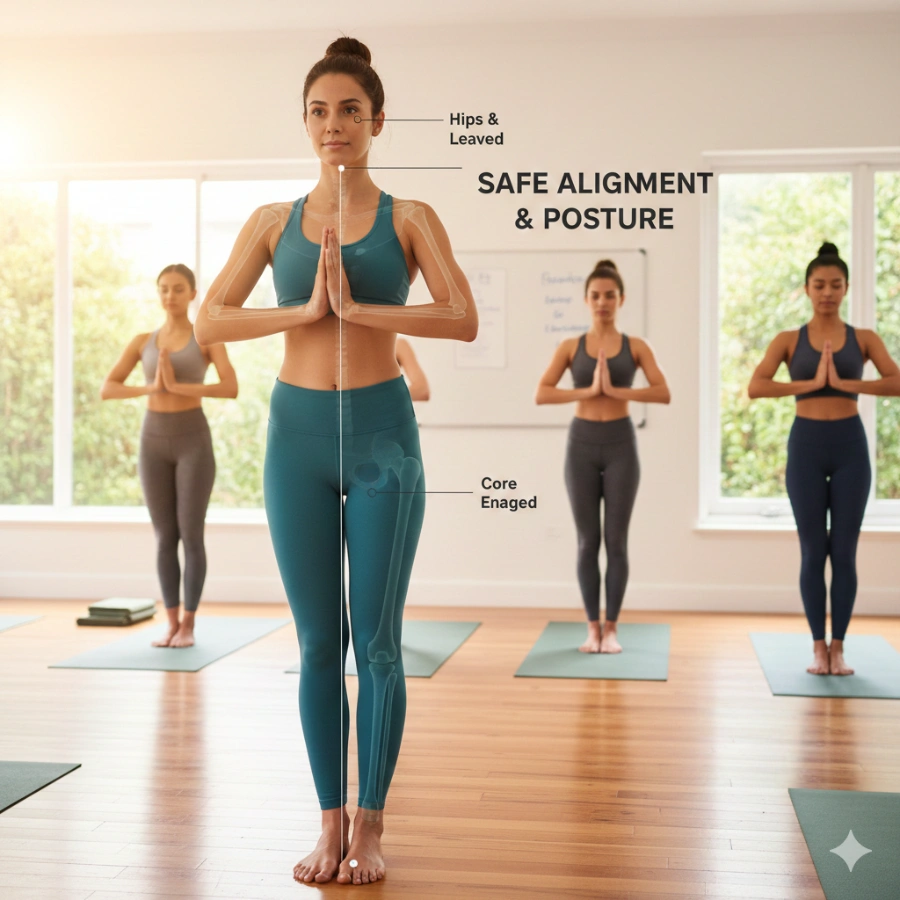
Stop immediately if you experience sharp, shooting pain, numbness or tingling in the arms or legs, dizziness or loss of balance, pain that worsens during or after practice, or vision changes and severe headaches. Consult a doctor first if you have a recent neck or spine injury, a diagnosed herniated disc or spinal stenosis, osteoporosis or severe arthritis, are in post-surgical recovery, or have a chronic condition affecting balance.
The golden rules: never force a position, never compete, never practise through sharp pain. Let your breath guide you, and remember that consistency beats intensity every time.
04Eight Poses for Neck Pain Relief
The full set of neck-focused poses: Neck Rolls in Easy Pose for cervical mobility, Cat-Cow Flow for neck and upper spine release, Thread the Needle for shoulder and neck tension, Eagle Arms for upper back relief, Puppy Pose for the shoulders and upper spine, Cow Face Pose Arms for shoulder and neck opening, Seated Neck Stretches for direct cervical relief, and Legs Up the Wall for a genuine nervous system reset.
Neck Rolls in Easy Pose (Sukhasana) is the simplest yet most effective neck relief practice, and a good one to learn in full. Sit comfortably, cross-legged on the floor or in a chair, letting the spine lengthen naturally. Ground through the sitting bones, hips higher than the knees if possible. Let the right ear fall toward the right shoulder — no forcing, pure gravity — then roll the chin slowly toward the chest, feeling the upper back stretch. Continue to the left shoulder, then gently tilt the head back. Complete five slow circles in one direction, then reverse for five more. Expect gentle stretching, occasional harmless clicking, and noticeably increased mobility right after. Two to three minutes is enough, and it can be repeated several times a day. Move as slowly as you can — the slower the movement, the greater the therapeutic benefit — and stop immediately if you notice sharp pain, dizziness or vision changes.
05Eight Poses for Spine Pain Relief
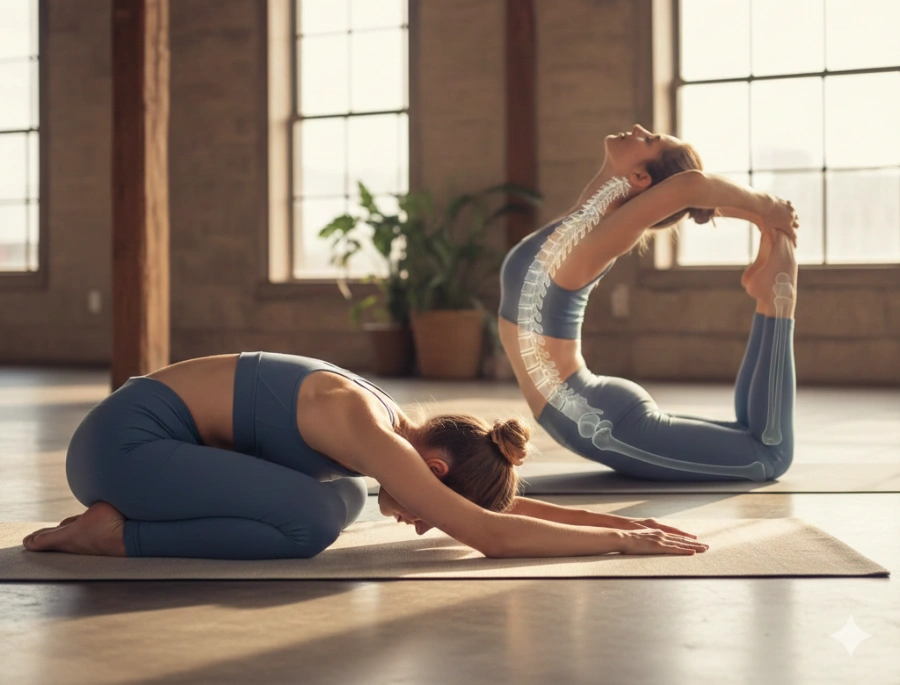
The full set of spine-focused poses: Child’s Pose for gentle spinal traction, Cobra Pose for back strengthening, Bridge Pose for posterior chain activation, Cat-Cow Spinal Flow for spinal mobility, Half Spinal Twist for vertebral decompression, Supine Spinal Twist for restorative release, Standing Forward Fold for spinal decompression, and Downward Facing Dog for full-spine elongation. Together with the eight neck poses above, this gives you sixteen genuinely proven tools, rather than a single quick fix.
06Creating Your Daily Practice Routine
For a complete fifteen-minute morning routine: six minutes of neck focus — Neck Rolls for two minutes, Cat-Cow Flow for two minutes, Seated Neck Stretches for two minutes — followed by eight minutes of spine focus — Child’s Pose, Cobra Pose across four rounds, Bridge Pose, and Supine Spinal Twist, two minutes each — closing with one minute of rest in Savasana.
For a five-minute office desk break: one minute of Neck Rolls, one minute of Eagle Arms, two minutes of Seated Spinal Twist, and one minute of Standing Forward Fold. For a more dedicated chronic pain protocol, practise all sixteen poses in sequence, holding each for one to two minutes, four to five times a week for eight weeks — most people see meaningful improvement well within that window.
07Deepening Your Understanding Through Training
These poses genuinely work, but understanding the reasoning behind them transforms the practice further. If you are serious about mastering yoga for spinal health — for yourself, or to guide others — consider deepening your knowledge through structured yoga teacher training. Understanding anatomy, alignment principles, and how to modify poses for different bodies makes a real difference, and for those drawn to teaching, a comprehensive 500-hour yoga teacher training provides the depth needed to guide students safely.
08Beyond the Mat: Lifestyle Integration
Yoga is powerful, but it is not magic on its own. A supportive pillow that follows the neck’s natural curve, a monitor set at eye level with movement breaks every thirty minutes, proper hydration since spinal discs are roughly eighty percent water, an anti-inflammatory diet rich in omega-3s, leafy greens and berries, active stress management through meditation, breathing or therapy, some strength training for the core and posterior chain, and eight to ten thousand steps a day all quietly amplify what the poses alone can achieve.
09When to Seek Medical Help
Watch for red flags: pain lasting six weeks or more, progressive weakness, loss of bladder or bowel control, pain that wakes you from sleep, pain following trauma, unexplained weight loss, or fever alongside back pain. Any of these warrant a doctor’s attention rather than more yoga. Complementary treatments worth considering alongside your practice include physical therapy, chiropractic care, massage therapy and acupuncture.
10The Honest Truth About Timelines
Acute pain relief typically arrives within one to two weeks; improved flexibility within three to four weeks; real strength gains by six to eight weeks; postural correction over two to three months; and a genuinely complete transformation across six to twelve months. Consistency beats intensity, always — there is no version of this that works faster through force.
The heart of it
- Neck and spine pain are deeply connected — treating them separately rarely works.
- Yoga addresses root causes: weak muscles, poor alignment, and trapped tension.
- Sixteen poses, practised consistently, outperform any single quick fix.
- Lifestyle factors like sleep, hydration and movement breaks amplify every result.
Your spine has carried you through every moment of your life. Isn’t it time you carried it back? Choose one pose. Practise it right now.
Explore Our Courses