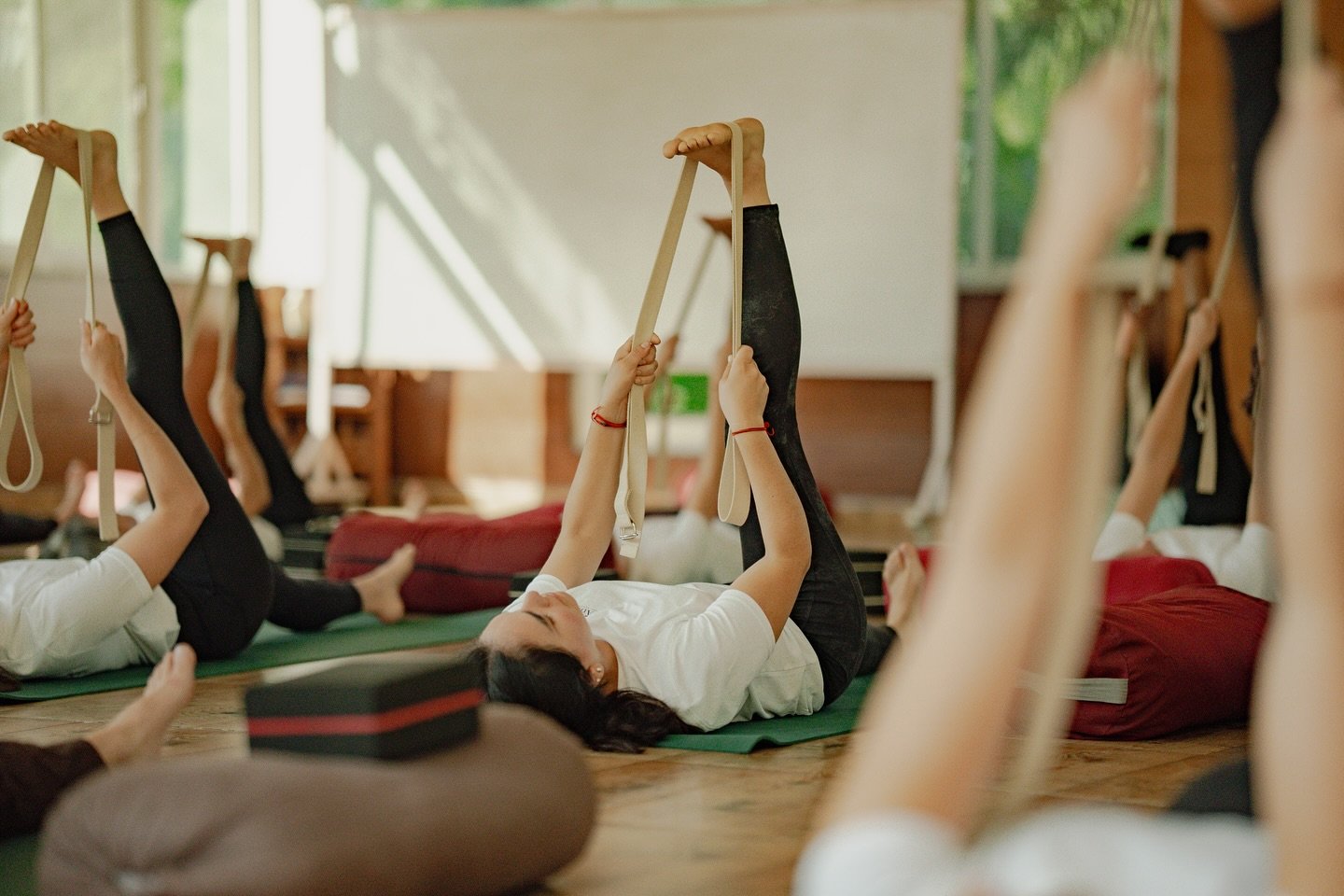

Starting yoga feels overwhelming. You see pictures of people twisted like pretzels. You wonder if you are flexible enough, and worry about looking silly in class. Here is the truth: yoga isn’t about touching your toes. It is about what you learn on the way down. As B.K.S. Iyengar once said, “Yoga is a light, which once lit will never dim. The better your practice, the brighter your flame.” This guide walks you through everything — safe poses for stiff bodies, how to avoid injury, finding the right class, and even what it takes to become an instructor yourself. Let’s start where you are right now.
01What Yoga Actually Means for Beginners
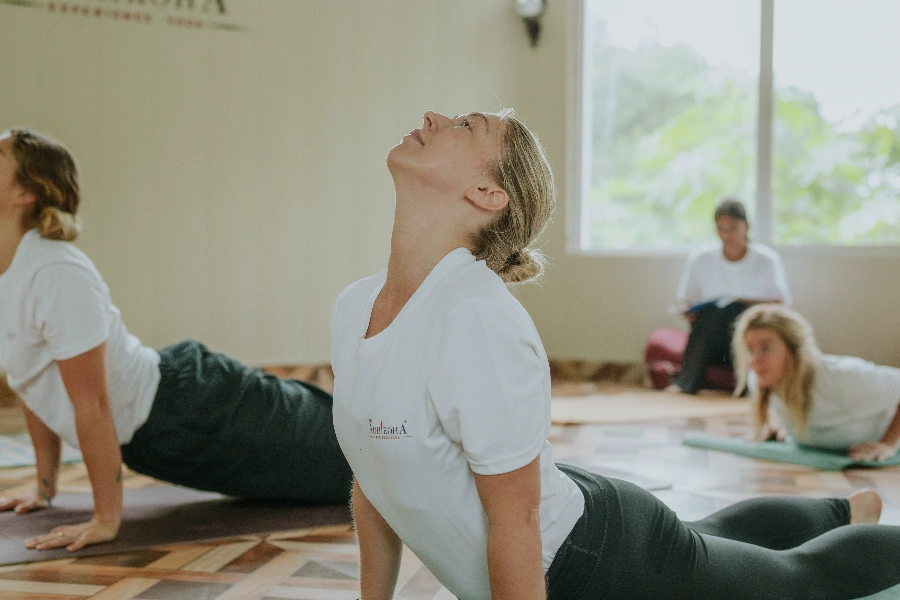
Yoga isn’t a flexibility contest. It is a practice of connecting breath with movement, developed by ancient yogis over five thousand years ago to prepare the body for meditation. You do not need to be flexible to start — you become flexible by starting. Think of your body like a dried sponge: it needs gentle, consistent soaking, not aggressive wringing.
In your first class, you will breathe, move slowly, and probably feel a little awkward. That is completely normal. The person next to you looking graceful felt exactly the same way once.
02Why Beginners Get Injured, and How to Stay Safe
Most yoga injuries do not happen because poses are dangerous. They happen because beginners push too hard, too fast. The real causes are familiar: pushing through pain, when pain is your body’s alarm system and ignoring it is like pulling the batteries from a smoke detector; comparing yourself to others, when the flexible person beside you may simply have years of practice, or hypermobile joints that bring their own challenges; skipping the basics, since advanced poses build on foundational strength, and jumping ahead is like trying to write poetry before learning the alphabet; and holding your breath, since shallow breathing creates tension while deep breathing releases it.
Practising safely from day one means listening to your body’s whispers so it never has to scream, using props without shame — blocks, straps and blankets are not training wheels, they are tools that help you practise correctly — resting whenever you need to, since child’s pose is always available, and finding a qualified instructor who explains modifications clearly. A good teacher makes you feel safe, not inadequate.
“Practice, and all is coming.” — Pattabhi Jois. But practise smartly.
03Your First Five Yoga Poses
These five positions build your entire foundation. Each one teaches an essential skill you will use for as long as you practise.
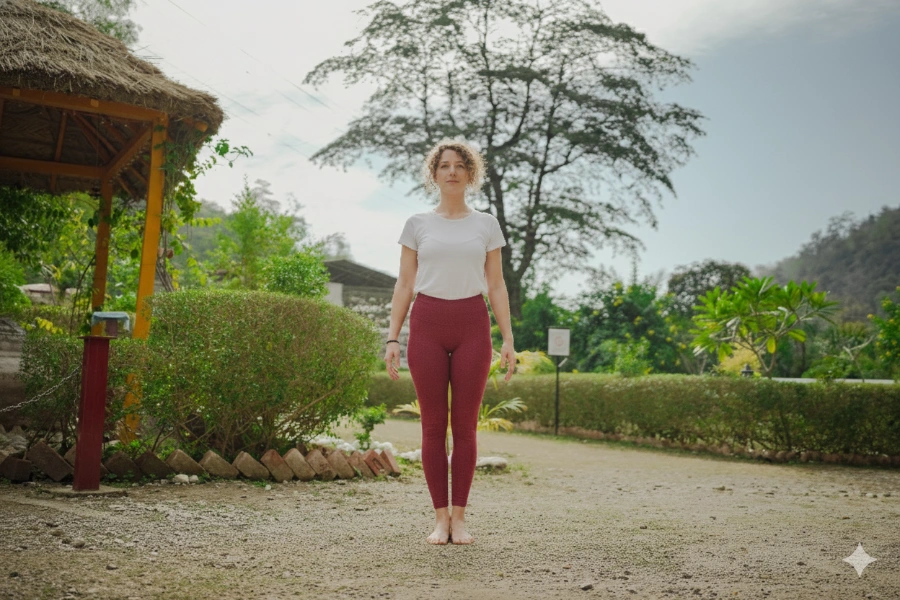
1. Mountain Pose (Tadasana) looks like standing, and feels like discovering your body for the first time. Stand with feet hip-width apart, press all four corners of your feet into the ground, engage the thighs gently, roll the shoulders back and down, and breathe naturally. This posture teaches proper alignment — every standing pose starts here. The common mistake is locking the knees; keep a micro-bend instead.
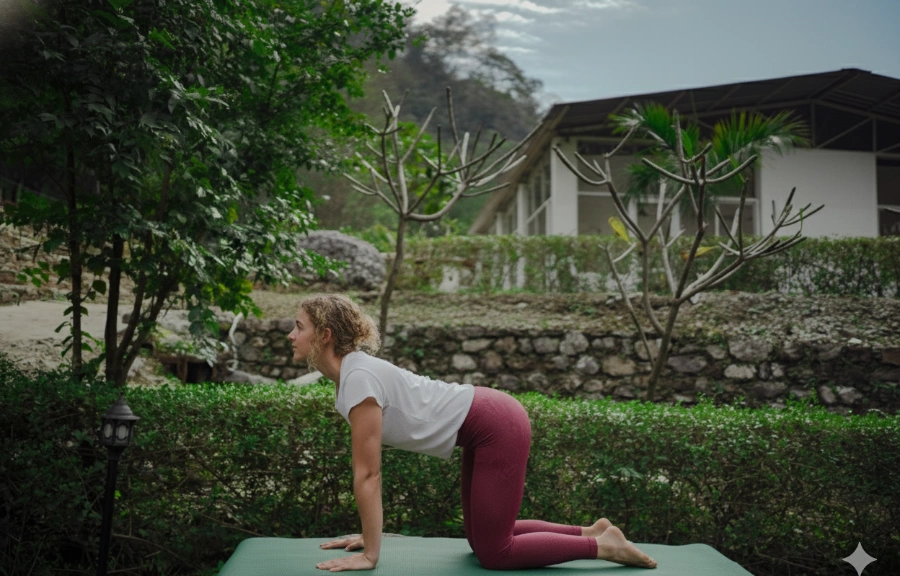
2. Cat-Cow Pose (Marjaryasana-Bitilasana) is your spine’s morning coffee. Start on hands and knees; inhale to drop the belly and lift the chest and tailbone (cow); exhale to round the spine and tuck the chin and tailbone (cat); move slowly with your breath. It mobilises every vertebra and teaches breath-movement coordination. If your lower back is sensitive, keep the movements small.
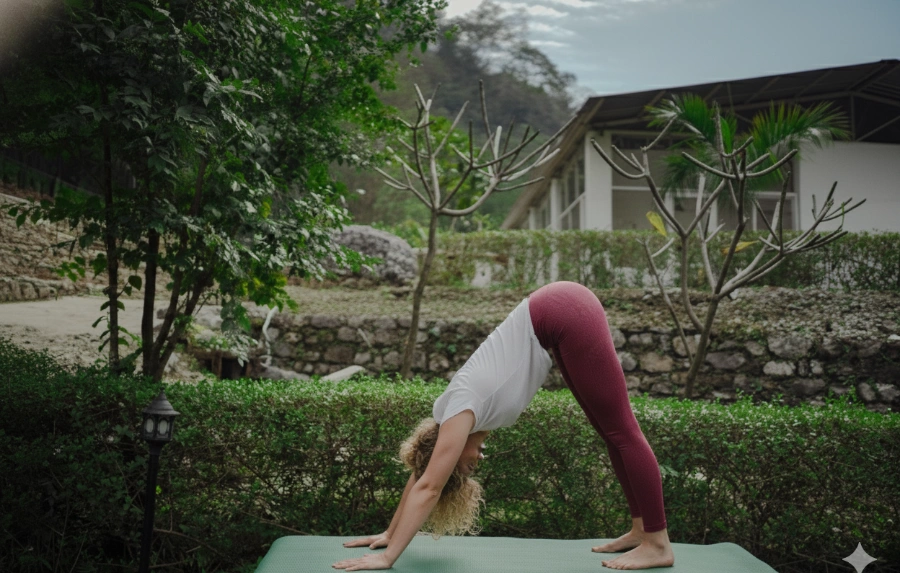
3. Downward Facing Dog (Adho Mukha Svanasana) is the pose everyone recognises. Start on hands and knees, tuck the toes, lift the hips up and back, press the hands firmly down, bend the knees generously, and let the head hang. It builds upper body strength and stretches the entire back body. Keep the knees bent as a beginner — straight legs are not the goal, length in the spine is. If you find weight dumping into your wrists, press into the fingertips and the base of the fingers instead.
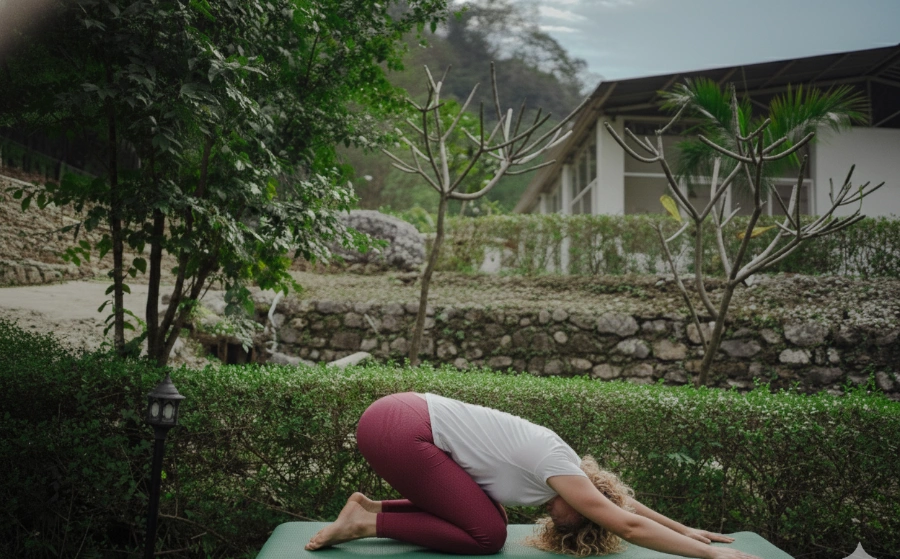
4. Child’s Pose (Balasana) is your reset button. Kneel with big toes touching, sit the hips toward the heels, fold forward with arms extended or alongside the body, and rest the forehead on the mat or a block. It teaches you that rest is part of the practice, and gently stretches the hips and back. If your knees feel too tight, place a folded blanket behind them; if your forehead doesn’t reach the mat, use a block or stacked fists; if you feel dizzy, simply turn your head to one side.
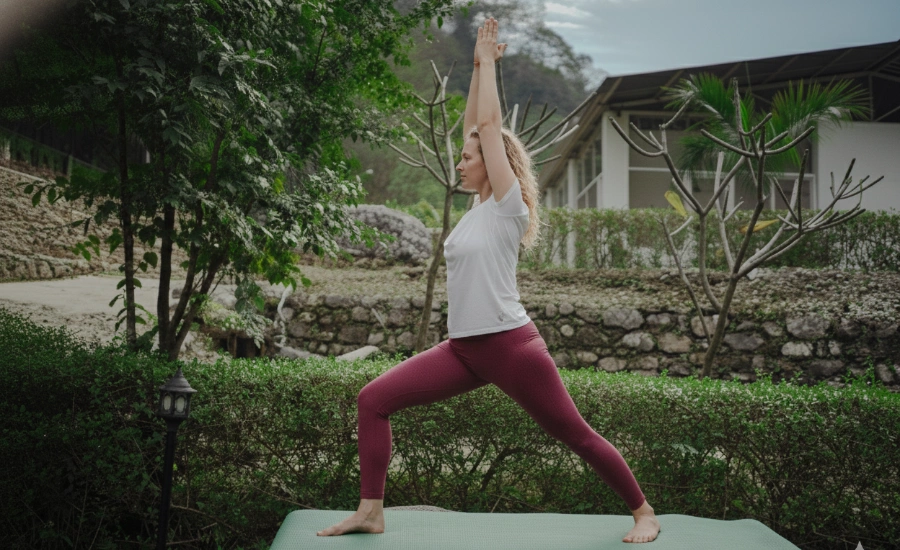
5. Warrior I (Virabhadrasana I) is where strength meets stability. Step one foot back roughly three to four feet, turn the back foot out slightly, bend the front knee over the ankle, reach the arms up, and square the hips forward. It builds leg strength, improves balance and teaches genuine focus. If your knee hurts, step your feet a little wider apart — think standing on train tracks, not a tightrope.
04Understanding Different Yoga Styles
Not all yoga is the same, and different styles serve genuinely different needs. Hatha yoga is the umbrella term for physical practice, usually moving slowly and perfect for learning proper alignment — ideal for complete beginners, people recovering from injury, or anyone who wants to understand the basics first.
Yin yoga holds poses for three to five minutes, using gravity and time to release deep connective tissue. It feels intense but should never hurt, and suits athletes with tight muscles, people who sit all day, or anyone who genuinely needs to slow down. A yin class teaches patience with your body’s resistance in a way faster styles rarely can.
Yoga Nidra, meaning ‘yogic sleep’, has you lying down while a guide leads a body scan and visualisation — you stay aware but deeply relaxed. It suits insomnia, anxiety, and anyone thinking ‘I’m too stressed to relax’.
Chair yoga adapts every pose for people who cannot get onto the floor, with a seated or standing modification for each one — genuinely valuable for seniors, office workers, anyone with mobility limitations, or people recovering from surgery. The chair isn’t a limitation; it is a tool that makes yoga accessible.
Ashtanga and Vinyasa link breath with continuous movement — Ashtanga through a fixed sequence, Vinyasa through creative flow. Both suit practitioners after foundational strength is already in place, and anyone who enjoys vigorous exercise. If that feels too challenging right now, start instead with morning meditation and pranayama breathing to build breath awareness first.
05Finding the Right Class
Location matters less than instruction quality. Look for classes described as ‘all levels’, ‘beginner’ or ‘gentle’; studios that cap class size around fifteen to twenty students; instructors who have completed at least a 200-hour Yoga Alliance certification; and studios offering a trial or introductory deal before you commit.
Before your first class, it is worth asking what to bring, whether modifications will be shown, whether there is hands-on adjustment, and what happens if you need to rest mid-class. Watch for red flags too — teachers who push you into pain, studios that feel competitive rather than supportive, instructors who never demonstrate modifications, or classes promising dramatic physical change overnight. None of these describe a genuinely good teacher.
06Common Mistakes That Cause Pain
Knowledge prevents injury. Skipping the warm-up matters more than it seems — muscles are like cold taffy, needing gentle warming to become pliable. Cranking the neck in Shoulderstand compresses the cervical spine when done incorrectly. Yanking yourself forward in seated folds tears muscle rather than lengthening it. Locking the joints transfers force to ligaments instead of muscle, where it does not belong. And practising only once a week rarely builds much at all — yoga is cumulative.
“Practice becomes firmly established when it has been cultivated uninterruptedly, and with devotion, over a long period of time.”
07Your First Week Practice Plan
Start small and build consistency rather than intensity. Day one: ten minutes learning to breathe — sit comfortably, close your eyes, breathe in for four counts and out for four, ideally paired with a short morning meditation to start the day centred. Day two: fifteen minutes covering Mountain Pose, Cat-Cow, Downward Dog and Child’s Pose. Day three: rest, or gentle stretching only — rest is genuine progress, not a day off from it. Day four: twenty minutes building strength through Warrior I, Cat-Cow and Downward Dog. Day five: twenty minutes of flow practice, linking everything you’ve learned to your own breath. Day six: attend an actual beginner or gentle class near you. Day seven: rest and reflect honestly on what felt good and what was challenging.
08When You’re Ready: Becoming a Yoga Instructor
Maybe you are just curious how people become instructors. Maybe you are already feeling the pull to teach. Either way, the path tends to follow the same four steps.
Build your personal practice first — at least one year of consistency before training, with some traditions recommending two or three. Teaching requires deep body awareness, and you cannot guide others through sensations you haven’t genuinely experienced yourself.
Choose your teacher training — the standard entry point is a 200-hour certification, covering anatomy and physiology, teaching methodology, philosophy and history, supervised practice teaching with real feedback, safe class sequencing, and basic business skills. A 300-hour training builds on that foundation with more advanced technique, and combined, the two form a 500-hour certification.
Get properly certified — look specifically for programmes registered with Yoga Alliance, which ensures your certification meets recognised industry standards rather than an informal weekend course.
Start teaching — begin with friends, offer free community classes, or assist an experienced teacher. Teaching is a genuinely separate skill from practising; you will feel awkward at first, and that is entirely normal.
Specialisations worth considering later include trauma-informed yoga, prenatal yoga, yoga therapy, Ayurveda courses to understand yoga’s sister science, sound healing to deepen meditation offerings, and modern Ayurvedic wellness integration more broadly.
Teaching yoga rarely makes anyone rich, but it connects you to community, deepens your own practice, and lets you guide others toward feeling genuinely better in their bodies. Most instructors teach part-time alongside other income; some build thriving studios; a few become international teachers. The path varies, but the foundation stays the same — real, sustained care for your students’ wellbeing.
09Moving Forward on Your Mat
You now know more than most people who have practised for months. You understand that yoga poses are tools, not goals, that pain isn’t progress, and that modifications are intelligent choices rather than admissions of weakness. You know the difference between Hatha’s deliberate pace and Yin’s deep holds, why chair yoga matters, and what Yoga Nidra actually offers. You’ve learned five essential poses and how to practise them safely.
Most importantly, you know that yoga meets you exactly where you are. Your tight hamstrings don’t disqualify you. Your busy schedule doesn’t exclude you. Your body, exactly as it is right now, is ready to begin. Start with one breath, one pose, one moment of presence — the rest will come.
The heart of it
- Yoga is not a flexibility contest — you become flexible by starting, not before.
- Most beginner injuries come from pushing too hard, too fast, not from the poses themselves.
- Five foundational poses, practised safely, build everything that follows.
- Teaching is a genuine option later, but only after a year or more of real personal practice.
As Patanjali wrote in the Yoga Sutras, “Yoga is the stilling of the fluctuations of the mind.” That stillness begins on your mat, today.
Explore Our Courses